Finishes
- Broom finish: textured, slip-resistant, economical
- Exposed aggregate: surface paste removed to reveal stones
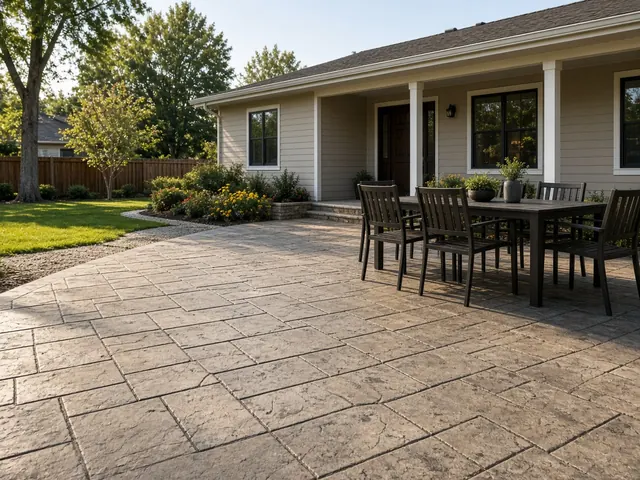
- Stamped: patterned to mimic stone, brick or wood; usually sealed
- Stained or colored: integral color or surface stains
Cracks and control joints
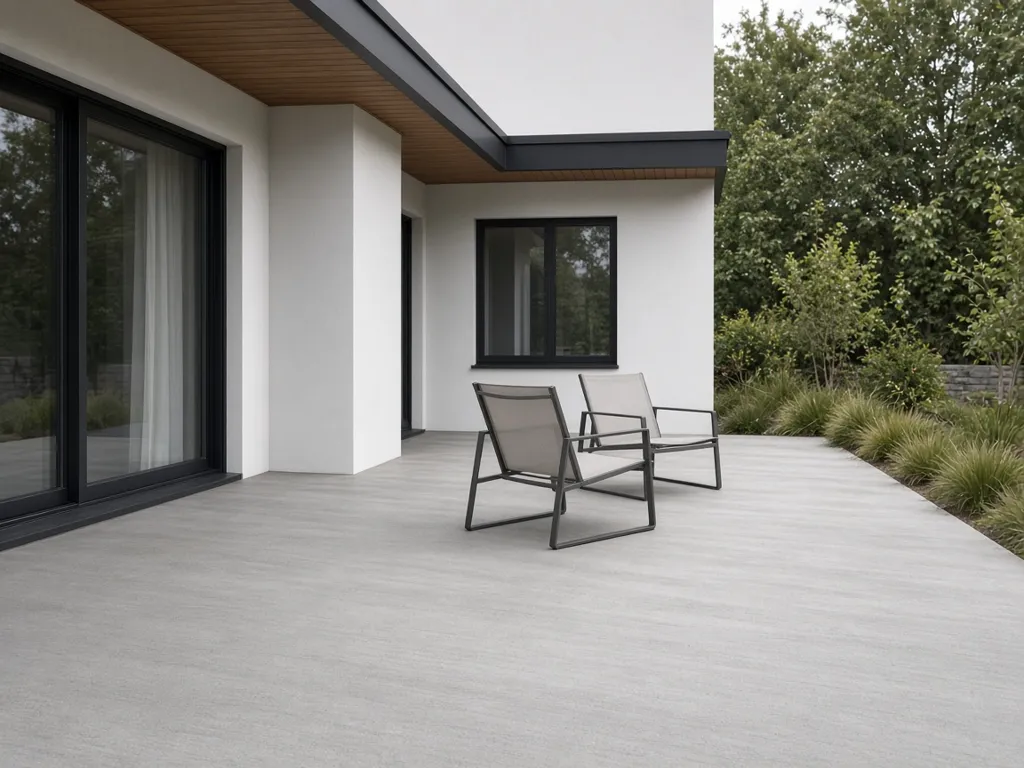
Concrete shrinks as it cures and moves with temperature, so some cracking is normal. Contractors cut or tool control joints to encourage cracks to form in straight, planned lines. Ask how joints will be spaced and where, and whether reinforcement is used. A good subgrade and base reduce settlement cracks.
Pour and cure
Curing—keeping new concrete moist and protected while it gains strength—affects durability. Avoid heavy loads until your contractor says the slab is ready. In freezing climates, ask about air-entrained concrete and avoiding deicing salts on young concrete.
Pros and cons
| Pros | Cons |
|---|---|
| Continuous, easy-to-sweep surface | Cracks are likely over time and hard to hide |
| Many decorative options | Repairs rarely match perfectly |
| Few joints for weeds | Stamped finishes need periodic resealing |
Frequently asked questions
Should a concrete patio be sealed?
Plain broom finishes often aren't; stamped and colored concrete usually are. Follow your contractor's and sealer manufacturer's guidance.
Can I put a new patio over old concrete?
Sometimes, with overlays or pavers on suitable bases, but only if the old slab is sound and drainage and door thresholds allow.