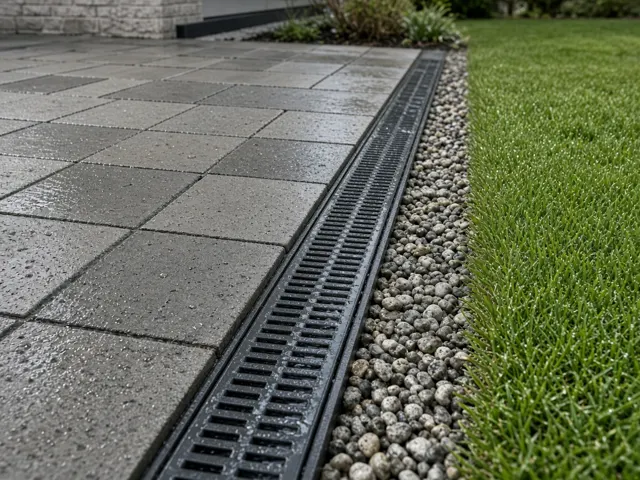
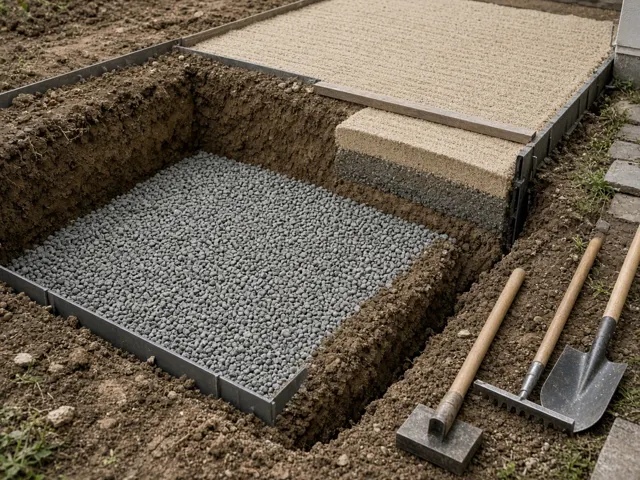
Build sequence (segmental pavers)
- Call 811 and wait for utility marks.
- Lay out and set grades, including slope away from the house.
- Excavate to the design depth, removing topsoil and organic material.
- Compact the subgrade; consider geotextile on weak or clay soils.
- Place and compact the base in layers (lifts).
- Screed the bedding layer.
- Lay units, install edge restraint, compact and fill joints.
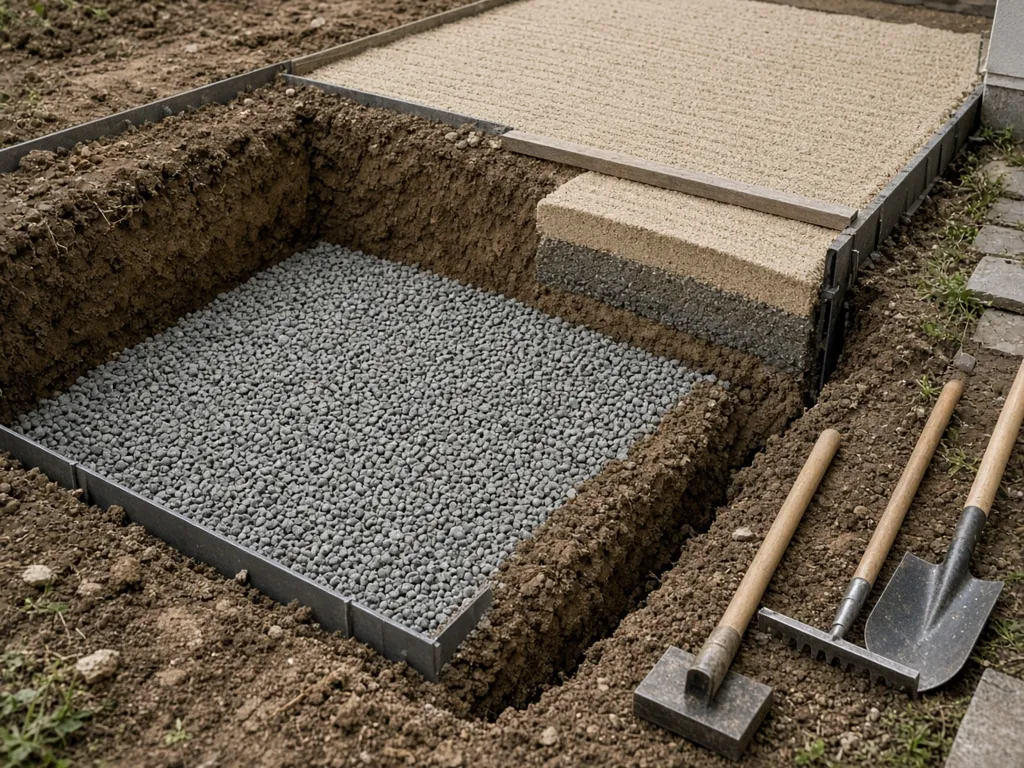
The aggregate base
Base depth depends on soil, climate, drainage and load (foot traffic vs. vehicles), so it should come from a design or the manufacturer's and industry guidance, not a single universal number. Compacting in thin lifts with a plate compactor matters as much as total depth.
Edge restraints
Without restraint, pavers creep outward and joints open. Common restraints include plastic or metal edging spiked into the base, concrete curbs and set border courses.
What to ask a contractor
- Excavation depth, base material and how it will be compacted
- Planned slope and where water will go
- Edge restraint type
- Which installation guideline they follow and what the warranty covers
Sources
- Call811.com (accessed November 8, 2026)
- Concrete Masonry & Hardscapes Association (accessed November 8, 2026)
Frequently asked questions
Can I lay pavers on dirt?
Not durably. Without a compacted base, pavers settle and shift.
Do I need a permit?
It depends on your jurisdiction; see our permits and codes article.