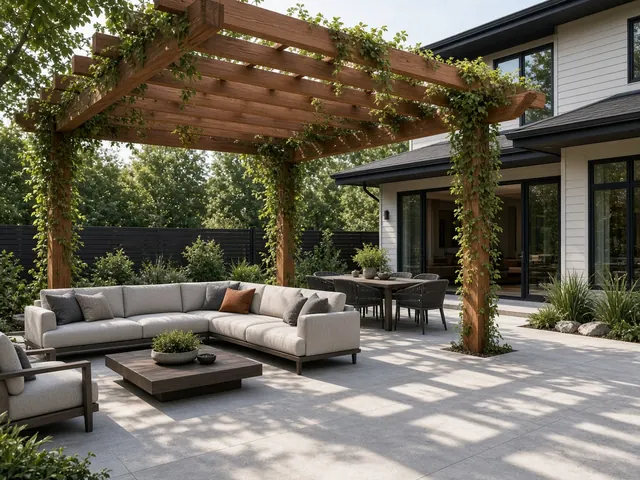
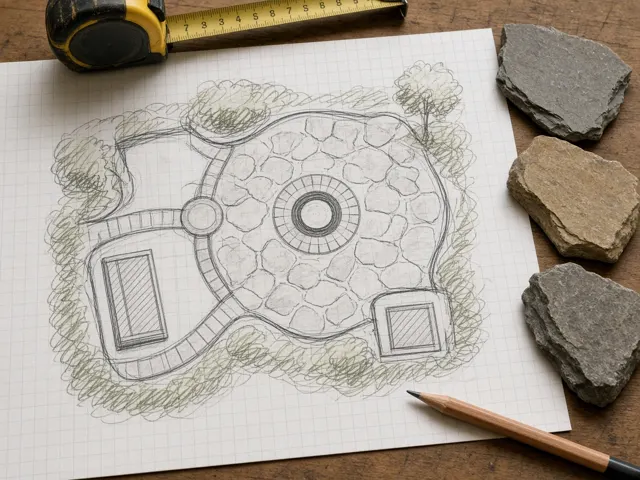
Layout zones
- Hot: grill, side burner, pizza oven
- Cold: fridge and storage
- Wet: sink, if plumbed
- Dry: prep counter and serving
- Dining: a separate area, out of the cooking smoke path
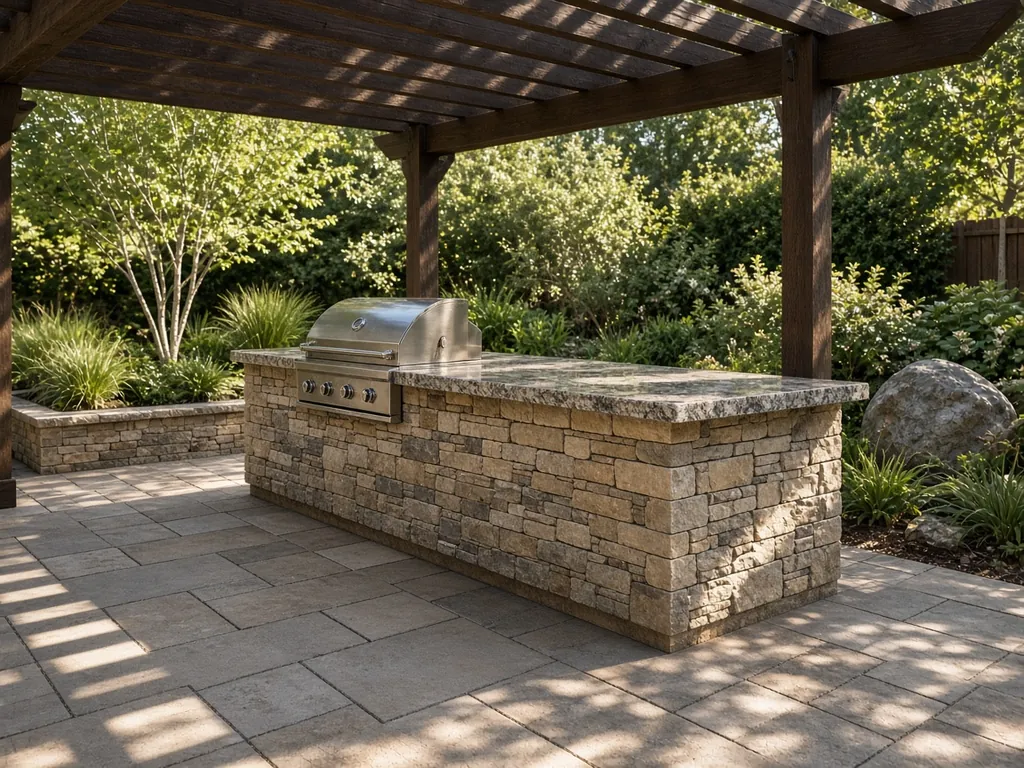
Base and load
Masonry islands, countertops and ovens are heavy. Many builders set islands on a concrete footing or slab, and continue pavers around them. Ask how your contractor will support the island and stop it settling separately from the patio.
Utilities
Plan gas, electrical (GFCI-protected outlets) and water lines before the base goes in. Licensed trades and permits are commonly required. Call 811 before digging trenches.
Surface choice
Choose stain-resistant pavers or porcelain near the grill. Seal concrete and natural stone against grease. NFPA advises keeping grills away from the home, railings, eaves and overhanging branches.
Cost figures are national ranges published by the cited sources, or are labeled illustrative. They are not quotes. Local prices vary by region, access, soil, design and season.
Sources
- NFPA: Grilling safety (accessed November 9, 2026)
- Call811.com (accessed November 9, 2026)
Frequently asked questions
Do I need a permit for an outdoor kitchen?
Often, for gas, electrical or plumbing work, and sometimes for structures. Check with your building department.
Can an island sit directly on pavers?
Light, prefab islands sometimes can. Heavy masonry islands usually need a footing.