Slope away from the house
Patios next to a house should shed water away from the foundation, never toward it. Hardscape guidance generally calls for a gentle, consistent cross-slope—enough to drain without feeling tilted. Your contractor or the product's installation guide should specify the slope.
What codes say
The model International Residential Code, Section R401.3 (Drainage) requires lots to be graded so surface water drains away from foundation walls, with a specified minimum fall away from the foundation and allowances for impervious surfaces next to the building. Local codes adopt and amend the IRC, so confirm requirements with your building department.
Drainage options
- Consistent surface slope to a lawn or planted area
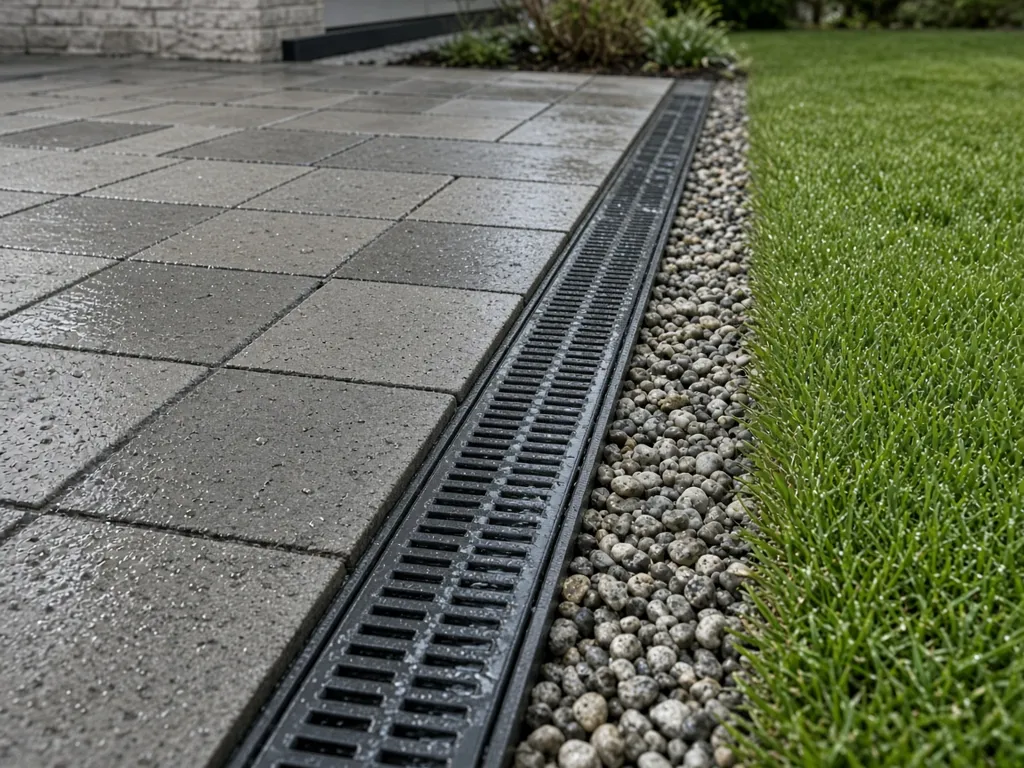
- Channel (trench) drains at doorways or low edges
- Downspout extensions or underground leaders discharging away from the patio
- Gravel strips, swales or rain gardens to slow and soak water (see EPA: Soak Up the Rain)
Permeable patios
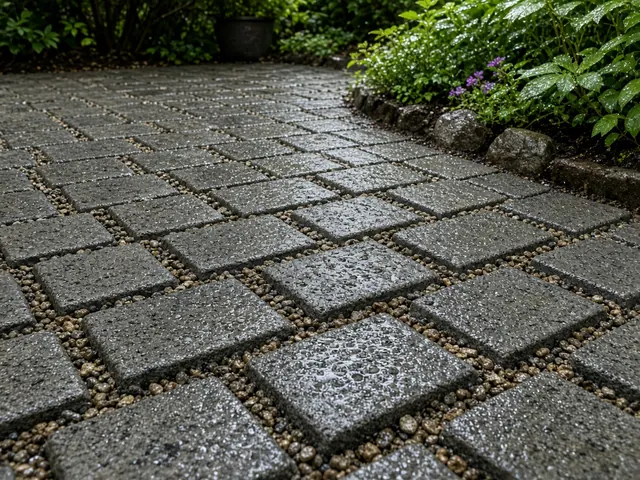
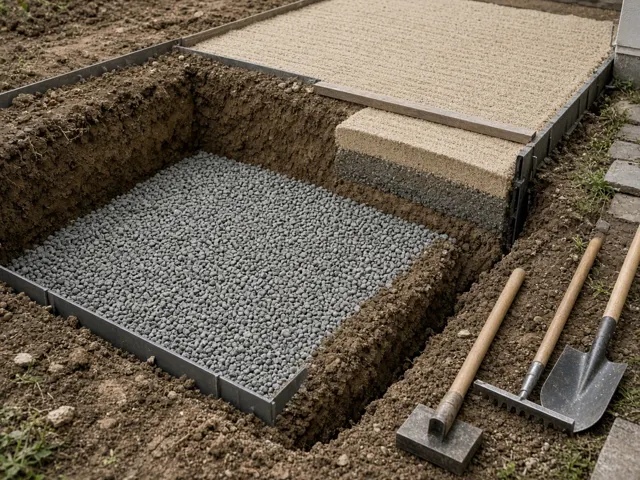
Permeable pavers let water through open joints into a deeper, open-graded stone base. They require their own design, can be affected by local soil infiltration, and need joint maintenance to stay permeable.
Sources
- International Residential Code, Section R401.3 (Drainage) (accessed November 8, 2026)
- EPA: Soak Up the Rain (accessed November 8, 2026)
Frequently asked questions
Why does my patio puddle?
Usually insufficient or reversed slope, settlement or a blocked outlet. Pavers can often be lifted and relaid to fix low spots.