How they work
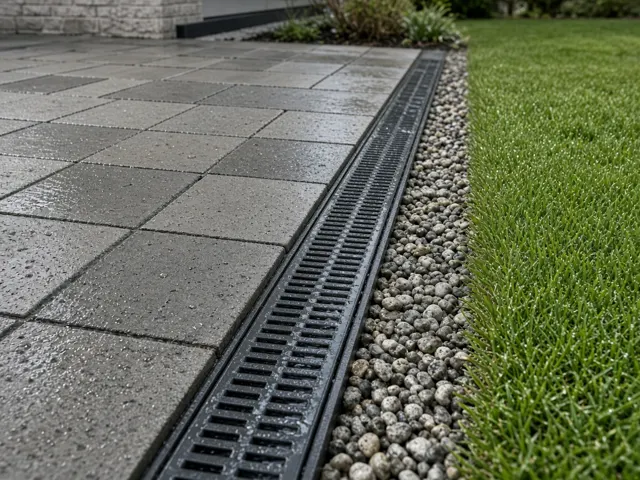
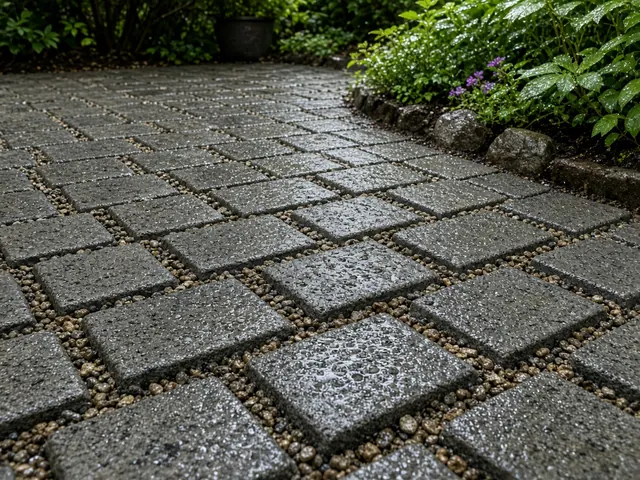
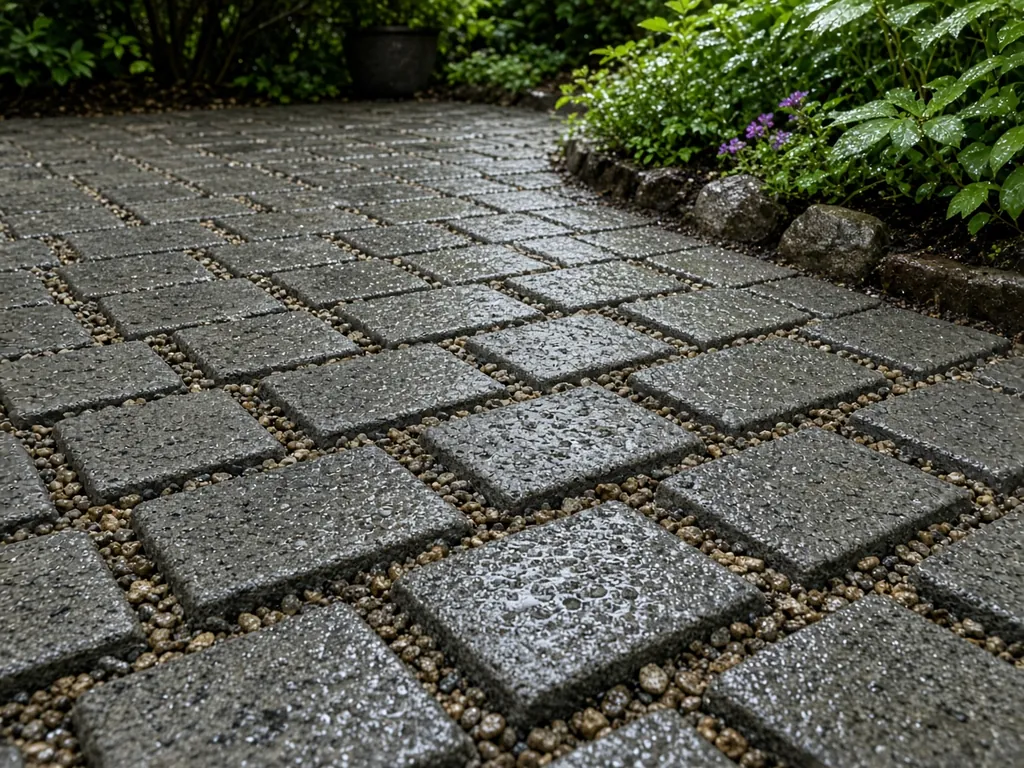
Units have wider joints filled with small open-graded stone. Water passes into a deeper base of open-graded aggregate, which stores it and lets it infiltrate or drain to an outlet. The EPA's Soak Up the Rain program describes permeable pavement as a way to reduce runoff.
Where they suit
- Sites with runoff or puddling issues
- Areas with stormwater fees or credits (check locally)
- Near trees, where they let water reach roots
They're less suited to steep slopes, contaminated soils or areas right against foundations without an engineered design.
Maintenance
Keep the joints open: sweep or vacuum debris, top up joint aggregate, and avoid piling mulch or soil onto the surface.
Costs
Angi's material ranges put permeable pavers at about $10–$30 per sq ft for materials. The deeper base and excavation usually make installed prices higher than standard pavers.
Cost figures are national ranges published by the cited sources, or are labeled illustrative. They are not quotes. Local prices vary by region, access, soil, design and season.
Sources
- US EPA: Soak Up the Rain, permeable pavement (accessed November 9, 2026)
- Angi: How much does it cost to install a patio? (accessed November 9, 2026)
- Concrete Masonry & Hardscapes Association (accessed November 9, 2026)
Frequently asked questions
Do permeable pavers prevent puddles?
When designed and maintained properly, water drains through the joints rather than pooling.
Can I use polymeric sand in permeable pavers?
No. Joints must stay open with clean aggregate.